
When most homeowners think about insulation upgrades, they picture rolling out batts or blowing insulation from inside the attic. But what many don’t realize is that attic insulation plays a major role in energy efficiency, indoor comfort, and overall home health.
At Pine Belt Insulation, we’ve worked on homes across Mississippi — from older ranch-style houses to new construction — and we’ve seen firsthand how proper attic insulation can lower utility bills, reduce HVAC strain, and solve persistent comfort issues. And in some cases, the smartest way to insulate an attic isn’t from the attic at all…it’s through the roof.
Below, we’ll break down why attic insulation matters, what homeowners often miss, and when insulating during a roof replacement becomes the ideal solution.
Why Attic Insulation Matters More Than You Think
Your attic sits directly between your living space and the outdoors, making it the number-one area where conditioned air escapes and outdoor heat enters. Without proper insulation, you’re essentially paying to heat and cool the attic — not your home.
Here’s what effective attic insulation helps prevent:
1. Energy Loss & Higher Utility Bills
Heat naturally moves from warm areas to cooler ones. In the summer, attic heat radiates downward, overwhelming your AC. In the winter, warm air rises and escapes through the attic. Proper insulation blocks this movement, helping your HVAC system run more efficiently.
2. Uneven Temperatures & Comfort Issues
Have you noticed that certain rooms are hotter or colder than others? Or that the second floor is harder to cool? Attic insulation is often the culprit. The appropriate R-value (insulation thickness/performance) helps maintain uniform indoor temperatures throughout the home.
3. HVAC Wear and Tear
When your system has to “fight” against attic heat or cold, it runs longer and harder, leading to premature breakdowns and higher operating costs.
4. Moisture & Humidity Problems
Mississippi humidity doesn’t just make the air feel sticky — it can cause attic moisture issues, mold growth, and wood rot if insulation isn’t done correctly.
Common Attic Insulation Options
Depending on the house, attic construction, and energy goals, Pine Belt Insulation may recommend:
- Blown-in fiberglass
- Spray foam (open or closed cell)
- Fiberglass batts
- Hybrid systems based on roof deck & ventilation
Each has different benefits for cost, coverage, energy performance, and installation location. Our goal is always to match the right insulation with the right home — not just sell the most expensive option.
When Insulating Through the Roof Makes More Sense
While most people assume insulation must be installed from inside the attic, there are situations where that’s not ideal — or even possible.
Here’s when insulating through the roof becomes the smarter approach:
1. The Home Has Finished Ceilings or Tight Attic Space
If the attic is finished, has vaulted ceilings, or lacks access, disturbing those surfaces to add insulation could mean:
- Tearing out drywall
- Repairing and repainting ceilings
- Disrupting daily living
In these cases, applying insulation to the roof deck from above becomes cleaner and more efficient.
2. The Roof Is Being Replaced Anyway
Roof replacement is the perfect opportunity to address insulation needs without adding extra demolition or labor. With the shingles and decking already removed, installers can:
- Apply spray foam to the underside of new decking
- Add rigid insulation above the deck
- Seal air leaks before finishing
It essentially bundles two major upgrades into one construction event.
3. The Home Needs an Unvented (Conditioned) Attic
Many modern homes — especially in hot climates like Mississippi — benefit from sealed attics, which:
- Reduce attic heat gain
- Lower HVAC workload
- Improve comfort in rooms below the attic
- Protect ductwork if it’s routed through attic space
Conditioning the attic requires insulating at the roof deck instead of the attic floor — which is easier to accomplish during roof replacement.
Real Project Example: Insulating Through the Roof to Protect Interior Ceilings
Recently, Pine Belt Insulation completed a project for a homeowner who needed an attic insulation upgrade but did not want to disturb their finished ceilings. Rather than tear out drywall or cut access holes, we coordinated with their roofing contractor and insulated through the roof.
Scope Included:
- Roof removal and decking access
- Spray foam applied to the roof deck
- New decking + shingles installed afterwards
- No interior mess, drywall removal, or repainting
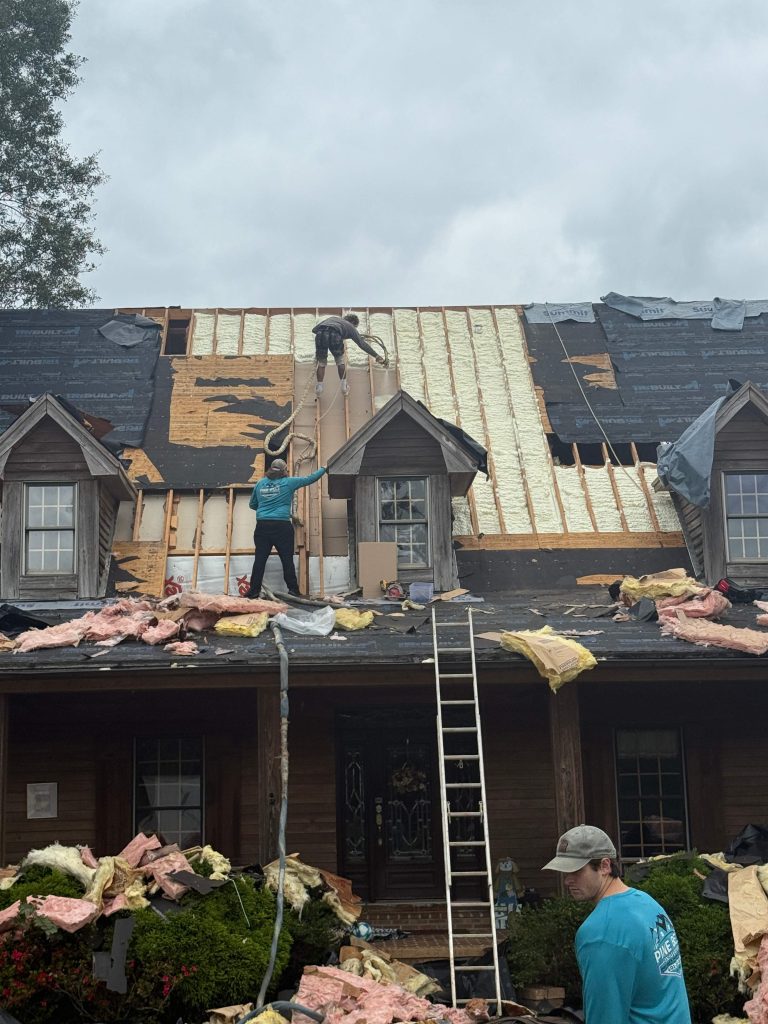
This method protected the home’s aesthetic, reduced attic heat, and improved comfort — all without stepping foot inside the living space.
How to Know If Your Home Needs Attic Insulation
Here are common signs we look for during evaluations:
✓ High utility bills year-round
✓ Hot upstairs bedrooms
✓ AC runs constantly in summer
✓ Cold drafts in winter
✓ Dusty or musty attic odors
✓ HVAC equipment located in attic
✓ Recent roof replacement or upcoming reroof
Pine Belt’s team can assess insulation needs, roof conditions, and HVAC impacts to determine the smartest approach — whether that’s blown-in insulation, spray foam, or roof-deck insulation during reroofing.
Considering an attic insulation upgrade?
We’re happy to take a look and give you options — including whether roof-deck insulation makes sense for your home.
Schedule a consultation today to learn how to improve comfort, reduce energy waste, and protect your home year-round.