

Old attic insulation can hide years of dust, moisture damage, pest activity, and deterioration. When that insulation is no longer helping your home, simply covering it with a fresh layer may not solve the real problem.
That is when professional attic insulation removal becomes an important first step.
At Pine Belt Insulation, we recently added a powerful new insulation removal machine to our equipment lineup. Around here, we call it “The Beast”—and once you see it in action, you’ll understand why.
What Is an Insulation Removal Vacuum?
An insulation removal vacuum is a specialized machine designed to extract loose insulation from attics, crawl spaces and other hard-to-reach areas. Unlike an ordinary shop vacuum, this equipment is built to move large amounts of lightweight insulation through heavy-duty hoses and into collection bags for disposal.
“The Beast” allows Pine Belt Insulation’s experienced crew to remove old batt or blown-in insulation in a controlled and efficient manner. It is particularly useful when an attic contains a large amount of fiberglass insulation that needs to be cleared away.
The machine remains outside while a large hose is directed into the attic. Old insulation is pulled through the hose and out of the home, helping keep the removal process contained.
When Should Old Attic Insulation Be Removed?
Old insulation does not automatically need to be removed simply because of its age. If the material is clean, dry and still in good condition, it may be possible to add new insulation over it.
However, removal may be recommended when the existing insulation has been compromised.
Water or Moisture Damage
Roof leaks, plumbing problems and excessive attic moisture can leave insulation damp or damaged. Wet insulation may lose its effectiveness, and installing new material over it does not correct the underlying issue.
The source of the moisture should always be identified and repaired before new insulation is installed.
Pest or Rodent Activity
Attics can become nesting areas for mice, squirrels, insects and other unwanted visitors. Insulation affected by pest activity may contain nesting material, odors or other contaminants.
Once the pest problem has been addressed, removing the damaged insulation can provide a cleaner starting point for the attic upgrade.
Fire or Smoke Damage
Insulation exposed to fire or smoke may retain odors, soot and debris. Depending on the extent of the damage, removal may be needed before the home can be properly reinsulated.
Severely Compressed or Deteriorated Insulation
Insulation works by trapping air. When it becomes compressed, disturbed or unevenly distributed, it may not deliver the thermal performance it once did.
Removal can also expose areas that were previously difficult to inspect, including gaps, penetrations and sections of the attic floor with little or no insulation.
Remodeling or Changing Insulation Systems
Homeowners may choose insulation removal during a major renovation or when changing the way an attic is insulated. For example, an attic may need to be cleared before certain air-sealing work or a new insulation system can be installed properly.
Does All Old Insulation Need to Be Removed?
No. This is an important distinction for homeowners.
Some companies may recommend removing everything, but complete removal is not necessary in every attic. Clean, dry and undamaged insulation can often remain in place while additional material is installed to improve coverage and R-value.
Pine Belt Insulation evaluates the condition of the existing material before recommending removal. The goal is to determine what the home actually needs—not to make the project larger than necessary.
Removal is most beneficial when the current insulation is:
- Wet or moisture-damaged
- Contaminated by pests
- Affected by smoke or fire
- Heavily compressed or deteriorated
- Blocking necessary repairs or air-sealing work
- Unsuitable for the planned insulation upgrade
What Happens During Professional Attic Insulation Removal?
Every attic is different, but the process generally begins with an inspection. The Pine Belt Insulation team evaluates the insulation’s condition, the type of material present, attic access and any visible signs of damage.
If removal is recommended, the work area is prepared and the vacuum equipment is positioned outside the home. A large hose is run into the attic, where the crew carefully directs it across the insulation.
“The Beast” then pulls the insulation through the hose and deposits it into large collection bags outside.
After the old material is removed, the exposed attic can be examined more closely. This may reveal air leaks, thin areas, evidence of past moisture or other issues that were hidden beneath the insulation.
Once necessary repairs or preparation work are complete, the attic can be reinsulated with the material best suited to the home.
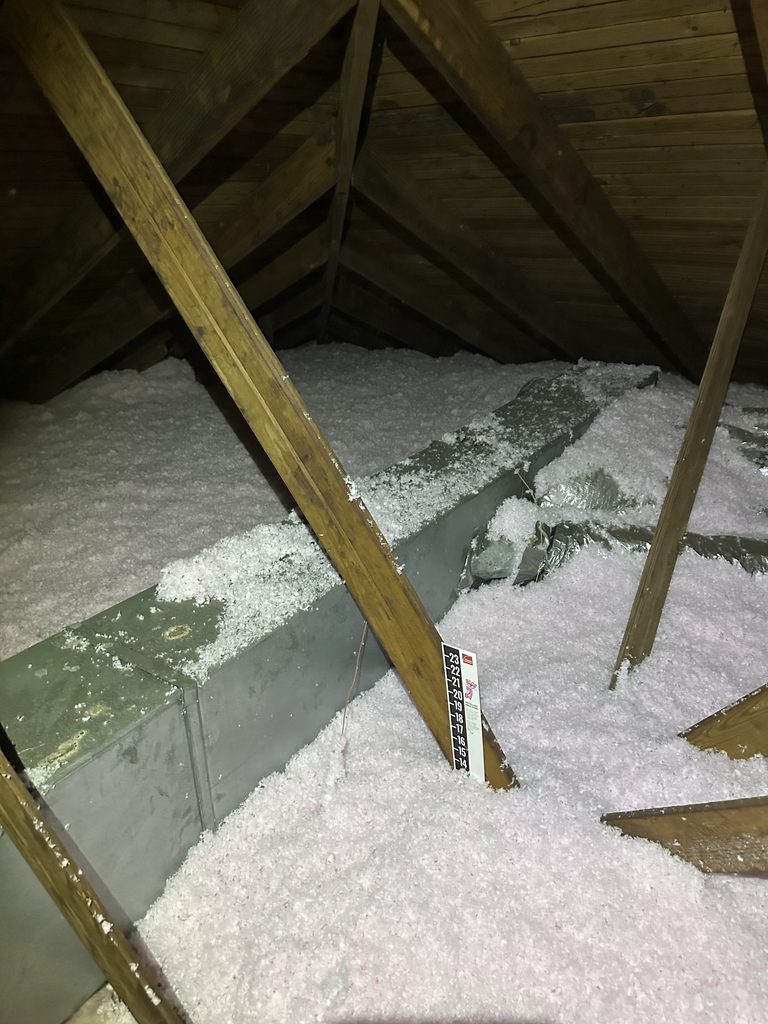
Why Professional Insulation Removal Is Different From Using a Shop Vacuum
Removing a full attic of insulation is not the same as cleaning up ordinary household debris. The material is lightweight, dusty, and spread across a large area. It may also be located around electrical wiring, recessed fixtures, ductwork, and attic framing.
A household shop vacuum has limited capacity and is not designed for large-scale insulation extraction. Professional insulation removal equipment is made to move the material through long hoses while the waste is collected outside.
Professional crews also have the protective equipment and attic experience needed to work around tight spaces and potential hazards. Insulation removal equipment requires proper training and appropriate safety gear, according to rental and equipment guidance.
What Are the Benefits of Removing Damaged Insulation?
When removal is genuinely needed, clearing out the old material can provide several advantages:
- Creates a clean surface for new insulation
- Exposes gaps and possible air leaks
- Removes insulation affected by moisture or pests
- Allows damaged areas to be inspected
- Makes it easier to achieve even insulation coverage
- Prevents new insulation from being installed over a hidden problem
The removal itself is only part of the solution. The greatest benefit comes from identifying why the old insulation failed and preparing the attic correctly before new material is installed.
What Type of Insulation Can Be Installed After Removal?
The right replacement depends on the home, attic design and the homeowner’s goals. Pine Belt Insulation offers several options, including:
Blown-In Fiberglass Insulation
Blown-in fiberglass works well in many attics because it can provide even coverage around framing and other obstructions. It is frequently used in existing South Mississippi homes.
Fiberglass Batt Insulation
Fiberglass batts are pre-cut sections of insulation designed to fit between framing members. They may be appropriate for certain attic, wall and floor applications.
Spray Foam Insulation
Spray foam expands after application and can provide insulation and air sealing. Whether it is appropriate—and where it should be installed—depends on the design and condition of the home.
Pine Belt Insulation can evaluate your attic and recommend the most appropriate material for your property.
Attic Insulation Removal in South Mississippi
South Mississippi homes face intense summer heat, high humidity, heavy rain and the occasional roof leak or unwanted attic visitor. These conditions can be especially hard on insulation that has already been in place for many years.
If your attic insulation is damaged, contaminated or no longer performing as it should, Pine Belt Insulation can inspect it and explain your options.
With “The Beast” on the job, our experienced team is equipped to handle large-scale insulation removal and prepare your attic for its next chapter.
Pine Belt Insulation has served South Mississippi families and businesses since 1987. We proudly provide insulation removal and replacement services throughout Hattiesburg, Laurel, the Mississippi Gulf Coast and surrounding areas.
Call Pine Belt Insulation at 601-261-3461 or request a free inspection to find out whether your attic needs additional insulation or a complete fresh start.