

If your electric bill keeps climbing every summer, you’re not alone. In Mississippi’s heat and humidity, air conditioners run almost nonstop. But here’s what many homeowners don’t realize:
Your insulation may be the real problem.
So let’s answer the big question:
Does new insulation really lower your electric bill?
Yes — and in many cases, significantly.
How Insulation Impacts Your Energy Bill
Insulation acts as a thermal barrier. In the summer, it keeps heat out. In the winter, it keeps heat in. Without proper insulation, your HVAC system has to work overtime to maintain a comfortable temperature.
According to the U.S. Department of Energy, homeowners can save up to 15% on heating and cooling costs by properly insulating attics, floors, and crawl spaces.
In Mississippi’s climate, attic insulation is especially critical because:
- Heat rises into attic spaces
- Roof temperatures can exceed 140°F in summer
- Poor insulation allows that heat to radiate into your living space
If your insulation is old, thin, or damaged, your AC is fighting a losing battle.

Signs Your Insulation Is Costing You Money
You may need new insulation if you notice:
- High summer electric bills
- Uneven temperatures between rooms
- Hot ceilings upstairs
- Drafty rooms in winter
- Insulation that’s 15–20+ years old
- Visible settling in attic insulation
Blown-in insulation can settle over time, reducing its R-value and effectiveness.
How Much Can You Actually Save?
Savings vary based on:
- Home size
- Current insulation levels
- Type of insulation installed
- Air sealing improvements
However, many homeowners in Mississippi see noticeable reductions in monthly cooling costs up to 25% after upgrading attic insulation.
In some cases, the insulation upgrade pays for itself in just a few years through energy savings alone.
What Type of Insulation Works Best?
The right material depends on your home and budget. Common options include:
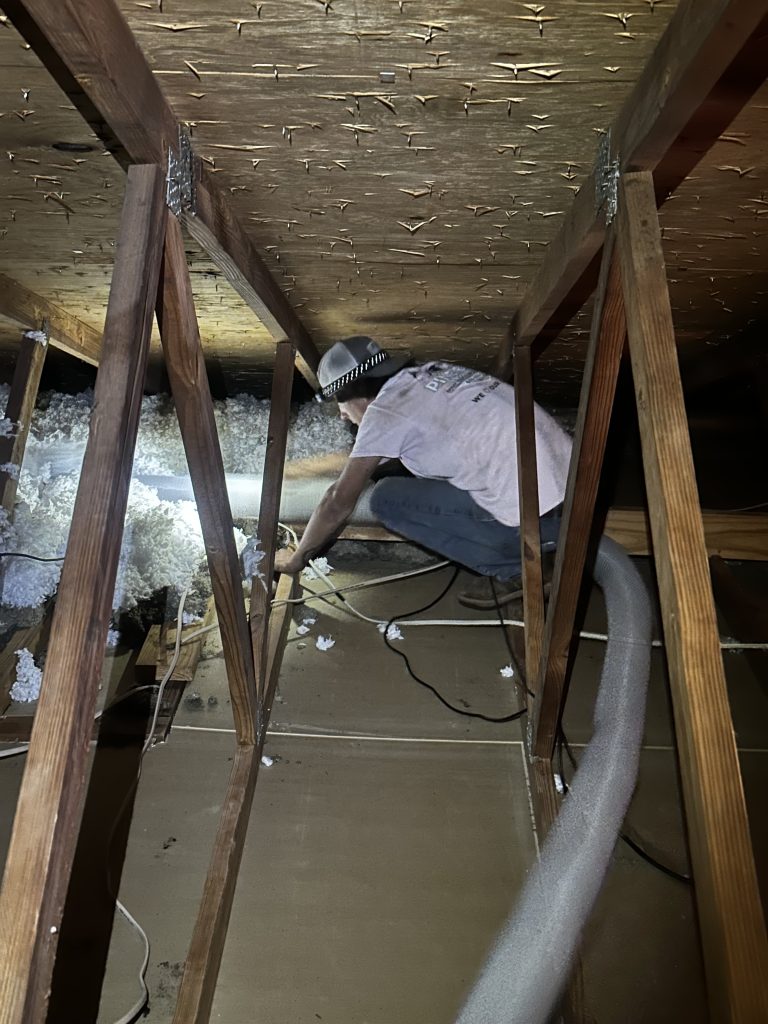
- Blown-in fiberglass – Cost-effective and ideal for attic upgrades
- Spray foam insulation – Provides air sealing and higher efficiency
- Batt insulation – Common in walls and new construction
A professional inspection helps determine what will provide the biggest energy impact for your home.
Can You Deduct Insulation on Your Taxes?
Here’s where it gets even better.
Under federal energy efficiency incentives, homeowners may qualify for a tax credit for installing qualifying insulation products.
Through the Energy Efficient Home Improvement Credit, homeowners can receive:
- Up to 30% of the cost
- Maximum credit of $1,200 per year
This credit applies to insulation materials that meet energy efficiency standards.
You can find details through the Internal Revenue Service under the Energy Efficient Home Improvement Credit (Section 25C).
Important notes:
- The credit applies to primary residences
- It covers materials (not typically labor)
- It must meet IRS efficiency requirements
- Always consult your tax professional for specific advice
That means upgrading insulation doesn’t just lower your monthly bills — it can also lower your tax burden!
Why Insulation Matters More in Mississippi
Homes in the South Mississippi face:
- Long, humid summers
- Mild but damp winters
- High cooling demand
- Moisture challenges in attics and crawl spaces
Insulation not only reduces energy use but also:
- Improves indoor comfort
- Reduces HVAC strain
- Helps control moisture
- Extends equipment lifespan
Is It Worth It?
If your insulation is outdated or underperforming, the answer is almost always yes.
Between:
- Lower monthly electric bills
- Improved comfort
- Potential tax credits
- Increased home value
New insulation is one of the highest-ROI home improvements you can make.
Schedule a Free Insulation Evaluation
If you’re tired of high electric bills, Pinebelt Insulation can assess your attic and crawl space to determine whether an upgrade would make a difference.
We serve homeowners throughout the Mississippi Pine Belt with professional installation and honest recommendations.
📞 Contact us today for a free estimate and start saving on your energy bills.