
Why Roof Insulation Matters in South Mississippi
1. Spray Foam Insulation
2. Fiberglass Batt Insulation
Pros:
- Affordable and widely available.
- Easy to install in open attic spaces.
- Fire resistant and effective when properly fitted.
Cons:
- Lower R-value per inch (around R-2.9 to R-3.8).
- Can leave gaps if not installed carefully.
- Prone to absorbing moisture, which lowers effectiveness.
Best For: Budget-friendly insulation projects and homes with wide, open attics.
3. Blown-In Insulation
Pros:
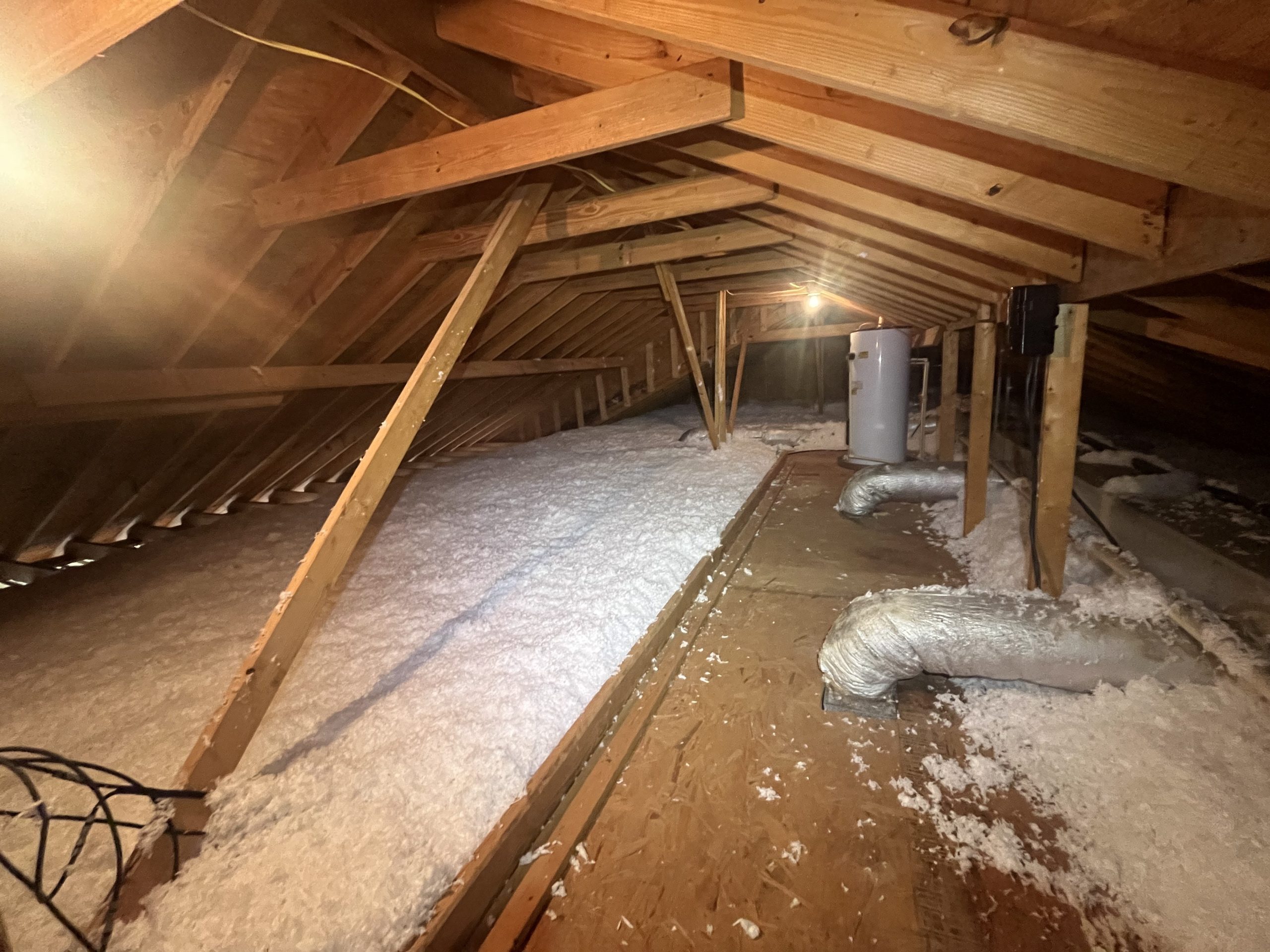
- Good coverage, filling small gaps and irregular spaces.
- Higher R-value than fiberglass (around R-3.2 to R-3.8).
- Made from recycled paper, making it eco-friendly.
Cons:
- Can settle over time, reducing effectiveness.
- May absorb moisture without proper vapor barriers.
Best For: Attics with many small or irregular spaces where batt insulation won’t fit well.
Comparing R-Values at a Glance
| Insulation Type | R-Value (per inch) | Key Strength |
|---|---|---|
| Spray Foam | R-6.5+ | Airtight seal, moisture barrier |
| Fiberglass Batt | R-2.9 – R-3.8 | Affordable, widely available |
| Blown-In Fiberglass | R-3.2 – R-3.8 | Eco-friendly, good coverage |
How to Choose the Right Roof Insulation
When deciding which insulation is best for your roof, consider:
- Climate: In humid South Mississippi, moisture resistance is key.
- Budget: Fiberglass and cellulose are budget-friendly, while spray foam and rigid board are long-term investments.
- Energy Efficiency Goals: If lowering energy bills is your top priority, spray foam or rigid board insulation provide superior performance.
At Pine Belt Insulation, we help homeowners weigh these factors and choose the solution that fits both their home and their budget.
Final Thoughts
The best roof insulation isn’t a one-size-fits-all answer—it depends on your home’s structure, your budget, and your energy efficiency goals. Whether you choose fiberglass, cellulose, rigid board, or spray foam, proper installation makes all the difference.
Ready to improve your home’s comfort and efficiency?
Call Pine Belt Insulation today to schedule your free consultation and find the insulation type that works best for you.